Brent Beshore
The life around the business.
In Columbia, Missouri, Brent Beshore measures a good life through family, faith, friendship and work designed to endure.
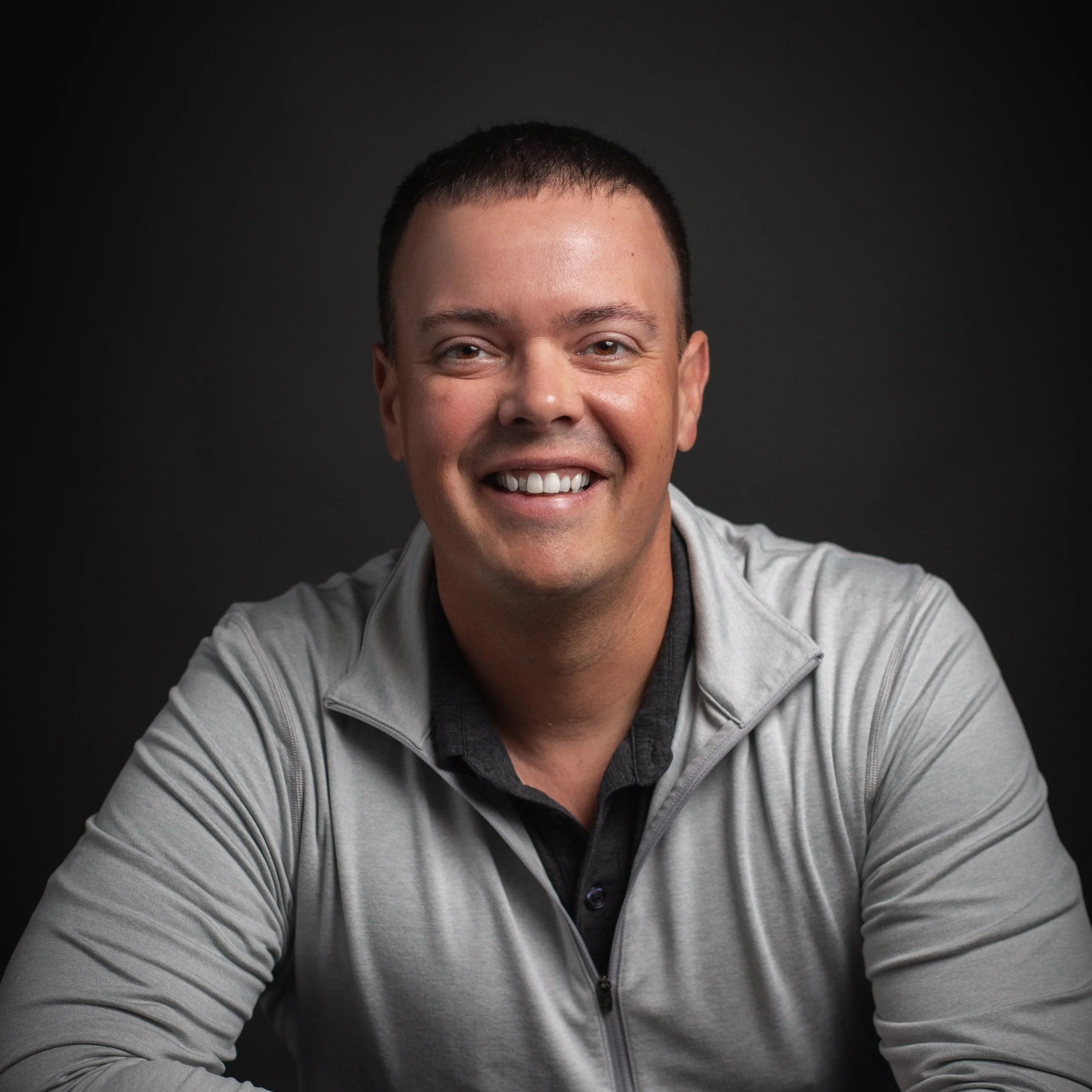
One of the numbers Brent Beshore chose to record at the end of 2025 was 358: the number of entries in his journal. Almost every morning, he wrote, he had been reading the Bible and putting his thoughts on paper. For the founder of Permanent Equity, examining a life had become a regular practice, with its own demanding questions about fear, approval and the way he spent his attention.
Columbia, Missouri, is the center of that life. Beshore and his wife, Dr. Erica Beshore, are raising three daughters and a son. His official biography makes room for church, competitive tennis and an admission of unimpressive golf. He serves on the board of Love Columbia. These details describe the relationships and interests around which the work has to fit.
His route into investing was entrepreneurial. After studying politics at Washington and Lee and spending part of his graduate education at the University of Missouri, he started marketing and events businesses. An acquisition helped turn that experience toward owning other companies. Permanent Equity traces its beginnings to 2007; its long-term fund structure followed in 2017. By then, building and operating had become the foundation of his approach.
Beshore is unusually willing to discuss the gap between visible success and private satisfaction. In conversation with The Knowledge Project, he described how much his marriage had changed and how misleading his earlier assessment of it had been. He also challenged the expectation that money remakes a person. The underlying question is uncomfortable for anyone rewarded for achievement: what happens if the things being measured leave out the things that matter most?
At Permanent Equity, the practical expression of patience is capital committed for 30 years. The firm’s stated foundations emphasize keeping promises, learning from operators and avoiding debt. Its role can include help with financial systems, recruiting, technology or marketing, depending on what a company needs. Those are ordinary functions with long consequences. A good hire or a more reliable system can change the daily experience of a business well beyond the original transaction.
The scale is substantial without losing its connection to smaller enterprises. In his 2024 letter, Beshore reported roughly $400 million in revenue and almost $50 million in distributable free cash flow across the portfolio, including funds and affiliated companies, supported by about 900 full-time employees. The following year brought no major acquisition or new fundraise, he wrote—a period of steady work inside what already existed.
His account of progress allows room for changing his mind. The 2024 letter explained a shift toward small company boards and a planning system called Blueprint, giving responsibilities and deadlines a clearer home. The same letter highlighted Brian’s Cabinets, the year’s sole acquisition, and improvements at an aircraft-parts business acquired before the pandemic. Patient ownership still asks for decisions, adaptation and people who can execute.
The holding period is an intention, with judgment attached. In the 2025 letter, Beshore made clear that a sale could be right if another owner would serve a company better. Permanent Equity also charges performance fees when cash is distributed to investors, rather than management, transaction or monitoring fees. The design ties its economics to realized cash while leaving time for the work.
Some of Beshore’s most visible work happens when he brings people to town. He founded Main Street Summit and helped create Capital Camp. The Summit’s format treats Columbia as a gathering place for owners, operators and investors, with sessions spread through downtown venues. Its current program pairs practical business discussions with meals, coffee and smaller conversations. The setting gives participants reasons to keep talking after a formal presentation ends.
That is a revealing use of influence: make a place people want to return to, then let relationships develop there. The Summit is built around people running companies, buying them or trying to become better at the responsibilities they already carry. It makes the social life of business visible—the introductions, shared questions and unhurried exchanges that can become useful much later.
His public conversations continue to circle back to life beyond performance. A March 2026 Colossus interview ranged across identity, relationships, the good life and tennis, alongside investing. The range itself is telling. For Beshore, the company belongs inside a larger conversation about how to live. Columbia offers that conversation a concrete setting: a home, a community and a business whose horizon extends well past the next deal.