Peter Huff
Keeping His Stride
Peter Huff’s path runs from collegiate track to an Austin investment firm backing everyday businesses. Behind the larger funds is a career built over decades—and a life beyond the deal.
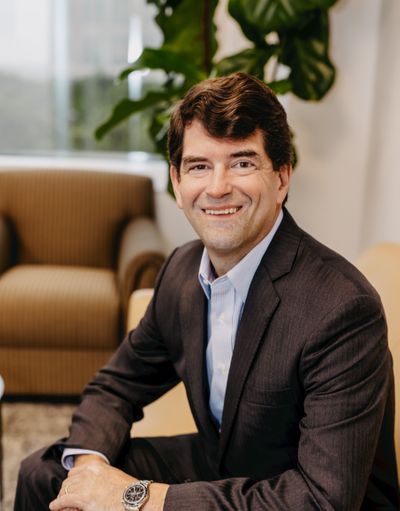
Peter Huff built his career in an industry measured by money. Before that, he competed in one measured by time. At Southern Methodist University, the future private-equity investor earned First-Team Academic All-American honors in track and field and graduated first in his class.
His professional life eventually took him through McKinsey, a Fulbright scholarship at the National University of Singapore, J. H. Whitney and Austin Ventures. In 2002, he cofounded Blue Sage Capital. Today, the Austin firm identifies him as its founder and managing member, with more than twenty-five years in private equity.
The résumé has international range. The business he helped establish has a more particular focus: companies making things, handling essential services and operating in markets where a founder may still be the person making the important decisions.
In February 2025, Iowa-raised Huff told Axios his ideal Sunday included running with his children, golfing with friends and cooking dinner.
It is a modest glimpse beyond the professional biography, but a useful one. The scale of a fund tells readers something about an investor’s work. It offers much less insight into what makes a day feel well spent.
Blue Sage’s financial scale has grown substantially. On January 29, 2025, the firm announced a $618 million close for its fourth flagship fund, more than twice the size of its $300 million predecessor. The original target had been $400 million.
The firm said it limited the fund’s size to preserve its focus on the lower middle market. Its backers included university endowments, foundations, pension funds and family offices, with some relationships stretching back to the firm’s beginnings. Blue Sage raised the fund without a placement agent.
That combination gives Huff’s next chapter its tension: more capital to deploy, while retaining a business model built around smaller companies. Fund IV’s stated priorities include environmental services, specialized manufacturing and other niche services, particularly in Texas, the Southwest and the Midwest.
One example arrived in September 2026. Blue Sage and Castle Capital announced Blue Castle Waste Solutions, bringing together founder-owned waste-collection businesses in Minnesota and Iowa. The investment came from Fund IV, linking the fundraising milestone to an operating business with trucks, equipment and local customers.
Huff described waste collection as an essential service and outlined an ambition to build a regional operator. The announcement emphasized investment in people and operations alongside further acquisitions. His official biography lists Blue Castle among the portfolio companies with which he is involved, alongside All-State Industries, Geo-Solutions and American Alloy.
Later that month, Blue Sage announced an investment in Clean Team, a commercial-cleaning company headquartered in Toledo, Ohio. The business operated eighteen branches across thirteen states, serving customers including healthcare, industrial and educational facilities.
The ownership arrangement is worth noticing. Clean Team founder and CEO Bob Armbruster would remain in charge and retain majority ownership. Blue Sage’s role was to provide growth capital and support expansion and acquisitions. The deal shows how bringing in an institutional investor can accompany a founder’s continuing leadership.
These are the businesses behind the fund announcements: waste collection, cleaning and specialized operations whose work continues whether or not their investors become familiar names. Huff’s career has placed him close to that less conspicuous part of the economy.
His public story combines a competitive academic and athletic beginning with the long work of building an investment firm. The amounts have become larger. The companies still require attention at an everyday level—people, equipment, customers and decisions that must hold up after the transaction closes.