Darina Garland
A bigger table.
For Ooni cofounder Darina Garland, a backyard cooking experiment became a global business. The human pleasures around it still help explain the ambition.
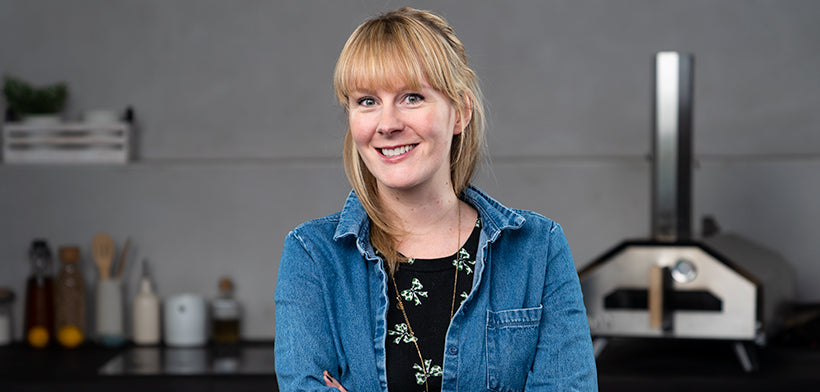
Darina Garland likes extra chilies. Asked about her cooking in a 2021 Pala Pizza interview, she described adding heat to pizza, enjoying rosemary and garlic with rock salt, and making Thai green curry when she wanted something else. Her backyard held the company’s oven range, although she was particularly enjoying cooking over wood and charcoal in an Ooni Karu. It is a useful glimpse of a founder as a customer: particular about the result, happy to experiment. The pleasure was in cooking something she wanted to eat, with the equipment close enough to become part of ordinary life.
The original problem was domestic, too. Her husband and business partner, Kristian Tapaninaho, had taken up pizza-making but could not get the heat he wanted from a conventional home oven. Traditional outdoor alternatives were expensive and cumbersome. As the couple later told Entrepreneur, they asked a neighbor who welded gates to help make a prototype. The small garden became a place to test a much larger idea.
They already understood working together. Their first venture, Suklaa, founded in 2007, designed education events. That background helps explain Garland’s interest in how people learn, gain confidence and participate. Selling a cooking tool would eventually involve all three. An oven had to perform; its owner also had to feel capable of using it.
The first Kickstarter campaign launched in November 2012. It raised £17,136 from 142 backers, against a £7,500 goal, Entrepreneur reported. The couple balanced their emerging product business with education work and a newborn. It was a very different financial life from the one Ooni would later support: Garland recalled their earlier education business earning about £50,000 a year between the work they were doing.
Looking back for Ooni’s tenth anniversary, the founders described an advantage in the campaign’s modest size. They could talk to the people who had backed them and manage the obligations. A much bigger success could have overwhelmed production before the business was ready. For Garland, that early need to care for customers helped establish the company’s culture. The money arrived with people attached to it.
By April 2025, Entrepreneur reported annual revenue of £157 million, roughly $200 million, with the company having grown without private-equity funding. That is company turnover, not the founders’ personal fortune. It puts Ooni at the larger end of independent operating businesses, far beyond the backyard project, while Garland and Tapaninaho remained its married co-CEOs.
Scale has not made her a believer in treating employees as interchangeable. In remarks reported by HSBC and WIRED Consulting in February 2026, Garland described a £500 Passion Fund for each team member to pursue an interest outside work. The point was distinct from professional training, which the company could fund separately. A hobby or retreat could matter because the employee’s life mattered.
Her leadership also involves deciding who gets taken seriously. In an interview on Ooni’s own site, she recalled being dismissed by bankers even while sitting beside them as a senior executive. She has mentored women navigating similar assumptions in outdoor cooking and sales. Her advice includes asking what counsel they would give a friend, then allowing themselves that same confidence.
The examples she admires extend beyond a corporate peer group. She has pointed to women building pizza businesses, the educators in her professional life and her own mother. Making connections is an active habit: research someone’s work, be clear about the reason for approaching them, and consider what might be useful to them in return. It is a practical approach to having a wider circle.
That outward view is built into Ooni’s geography. The 2026 HSBC account describes teams across several continents and a business designed to ship internationally from the start. Garland also emphasized continuing to improve the products: different fuels, indoor cooking and a dough mixer gave customers more ways in. The company had to keep earning its place as the category expanded.
The early crowdfunding conversations remain a revealing reference point. A backer was someone waiting to cook, with questions the founders needed to answer. Garland’s account of those years connects customer care with the freedom to keep testing ideas. The company became much bigger, but the useful question stayed close to home: what would make the experience better for the person preparing dinner?