Robin Haak
Robin Haak Took the Long Way Back to Venture.
A café in Bhutan, harvests in Burgundy and a deliberately small fund. The Berlin investor has built a career around getting close enough to people to be useful.
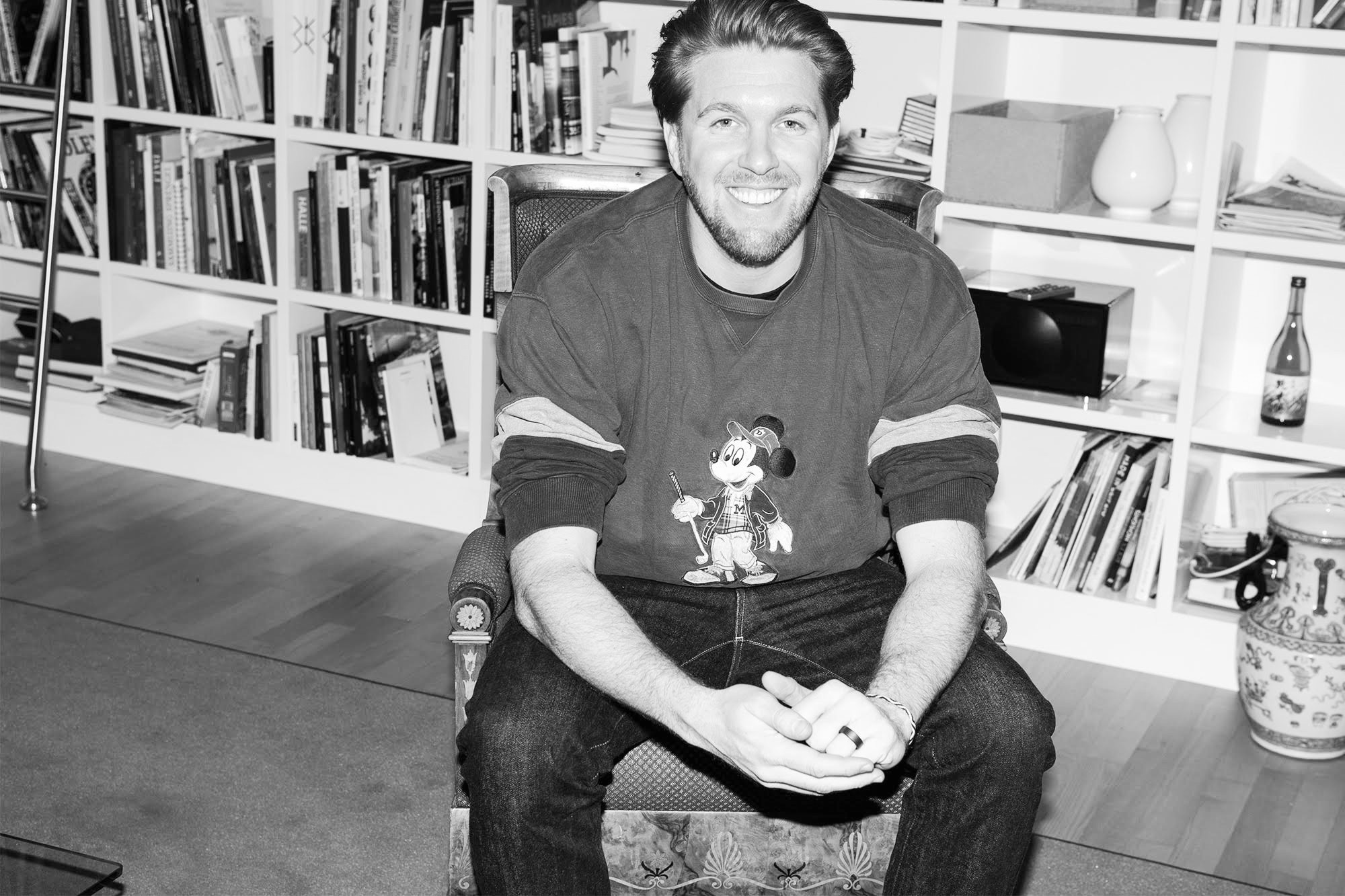
Robin Haak makes room in his year for the grape harvest. His official biography places him at Domaine de la Romanée-Conti in Burgundy, working among the vines, a recurring counterweight to the speed of venture capital. He has also fought Muay Thai in Thailand and still trains. Cooking, reading and travel round out the picture. These are physical, absorbing ways to spend time for a man whose working life revolves around deciding which futures deserve money.
The Berlin investor’s résumé could easily swallow those details: entrepreneur, operator, growth investor, founder of Robin Capital. But the detours help explain the appeal of the enterprise he has chosen to build. He wants a fund with a person at its center, one whose name and availability are part of the proposition. The size of that ambition is measured partly in how closely he can stay involved.
Haak’s early education was broader than a finance syllabus. He studied political science in Salzburg, with history, law and theology among his interests, before taking an MBA in media management in Hamburg. On his firm’s website, he remembers childhood visits to a printing press with his father: heavy paper, ink and an insistence on the labor behind good journalism. It is a small, tactile memory in a professional world that now spends so much time discussing artificial intelligence.
His first working chapter took him into mergers and acquisitions at Axel Springer and then into the Axel Springer Plug and Play Accelerator. Watching entrepreneurs was followed by becoming one. He co-founded Jobspotting, the job-matching business that joined SmartRecruiters, and took on international operating responsibilities at the larger company. In his own account of those years, the detail that lingers is the founders paying themselves minimum wage for three years while he pitched hundreds of investors. The polished career arc contained a long stretch of uncertainty.
Then came a period of movement. On the EUVC podcast, Haak described traveling with an eight-kilogram backpack, taking the Trans-Siberian train toward Mongolia and walking the Camino de Santiago three times. A person accustomed to enterprise software and fundraising was putting himself into situations that required different kinds of attention. The journey eventually produced an investment with none of the familiar venture trappings.
In Bhutan, his guide, Rinzin Tsheten, wanted to open a café. Haak later wrote that he supplied most of the backing, with others contributing, and Shelter Cafe opened in Thimphu in early 2020. The pandemic soon cut off the tourist trade. Haak kept sending money; the business tried food and local promotion. Eventually, he wrote, he had to stop the support.
His newsletter gave Rinzin space to describe the café and its closure in his own words. It was a place of books, plants and warm light, built around a hope for a more settled life. The story ended with a friendship and a failed business, rather than a tidy lesson about an investor’s foresight. Haak’s willingness to tell that version gives the episode its weight. Supporting someone and being able to save their venture turned out to be different things.
Back in investing, he helped build Revaia before setting up his own fund. His December 2022 announcement explained the attraction of working alone: fewer layers between conviction and a decision, and personal responsibility for what followed. He described the move as a shift into service, with founders and investors both part of a community he intended to connect. Having been on the fundraising side of the table, he wanted to be a useful sparring partner.
Robin Fund One closed at €13 million, alongside a €2 million growth vehicle, according to December 2024 reporting. In a July 2026 interview with Murph Capital, Haak said Fund II had reached approximately €12.6 million after its second close, toward a €15 million target, with a final close planned for the fourth quarter.
By that July interview, the firm had made roughly 50 investments across its two funds, generally writing checks of €100,000 to €600,000. Enterprise technology remained central, with the newer portfolio reaching further into robotics, space and other deep technology. Haak described a model without routine board seats, designed to support founders alongside other investors. The arrangement depends on making his experience accessible without making himself the center of every company.
The firm’s own description makes the social architecture unusually explicit. Founders can reach the person making the investment decisions; venture partners and an operator network extend the help available. Gatherings bring founders and investors together. For all the language of software and defensibility, part of the product is still a room of people who may know how to help one another.
That leaves Haak with an interesting balance to maintain: being widely connected while preserving the intimacy that gives those connections value. His travels have supplied striking scenery, but the café story is the more revealing souvenir. It carries an individual’s hopes, an investor’s limits and a relationship that outlasted the business. Alongside the annual harvest and the training, it suggests a life in which venture capital has company.