Rita Robbins
Room to grow.
A securities broker, a mentor and a lavender-farm owner: Rita Robbins has spent a career opening doors, then finding a little more room beyond them.
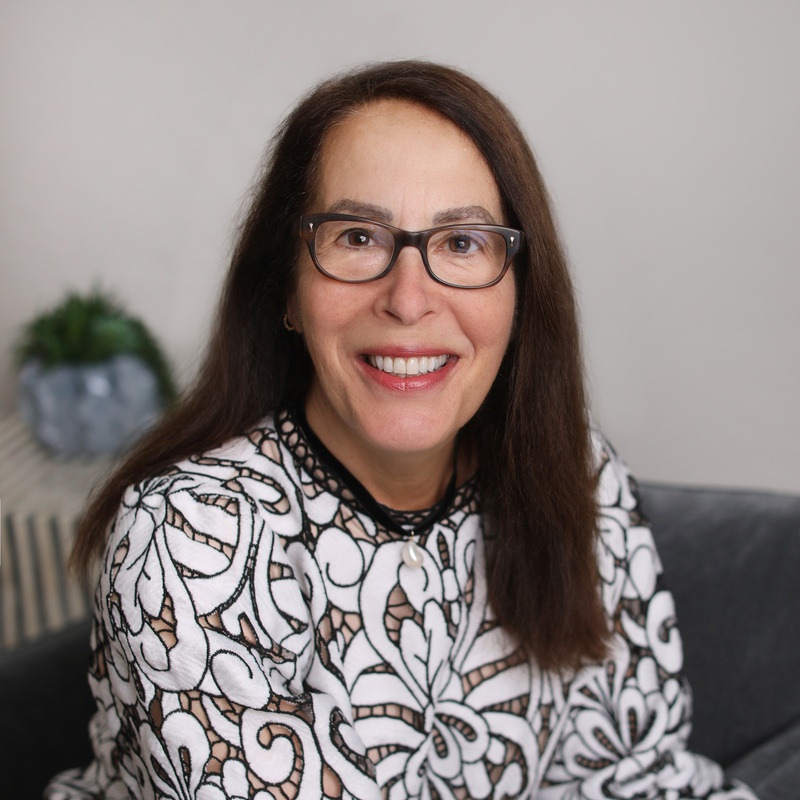
Rita Robbins became a lavender-farm owner before she had seen the farm. In 2015, a friend from the financial business, Bill Mansfield, proposed buying a property near Boyne City, Michigan. Robbins and her husband, Bruce, joined Bill and his wife, Erin. For a New Yorker who had never had a yard, the decision opened a new chapter: fields to tend, a barn to improve and a place where strangers could spend an evening together.
Recalling the early years in a 2021 interview, Robbins singled out the first concert as a moment of pride. The work had included floors, bathrooms and lighting, the unromantic infrastructure that lets a beautiful place welcome people. She had initially imagined the satisfaction of growing lavender. Watching the employees develop became another reward. Most of her year was still spent in New York; she wished she could spend more of it at the farm.
Her working life began much closer to other people’s anxieties about money. Robbins’s firm biography traces her interest in finance to a painful family experience: her parents lost money intended for a house down payment through their stockbroker. That memory gave financial guidance an intimate significance. She founded Affiliated Advisors in 1994 and remains its managing partner, building a business that supports the advisers sitting across the table from families with plans of their own.
The route was hardly a straight invitation into the industry. In an interview with executive recruiter Ellen Kinlin, Robbins described starting as an assistant to four E.F. Hutton brokers. The client conversations and the connection between current events and markets appealed to her. When she sought a broker position, she recalled being told that the branch already had its woman. A man with hardware-store experience and an attractive golf handicap got the opportunity instead.
That recollection helps explain why access remains central to her career. She learned the independent brokerage model with encouragement from mentor Jay Lewis, eventually creating an organization that could help other advisers establish and run their practices. Independence still required an operating structure: someone had to understand the rules, the technology and the practical demands of a business. Her company grew around that work, giving individual advisers support without requiring them to build every function themselves.
Robbins is herself a registered securities broker, alongside her advisory registration. FINRA’s record lists her with Osaic Wealth and records a Series 7 examination passed in 1984 and a general securities principal examination passed in 1995. The distinction matters to her story: the brokerage credential and supervisory responsibilities are real parts of her professional history, extending beyond the founder title.
By May 2025, WealthManagement.com reported that Affiliated Advisors supported more than 150 advisers and teams, with almost $7 billion in assets under administration. Thirty advisers bringing roughly $1.5 billion in client assets had joined during the first quarter. Those figures describe the scale of the network’s client business. The supporting work included compliance, technology, marketing and business consulting, as well as helping advisers navigate acquisitions and succession. Succession gives that infrastructure particular significance when a founder prepares to retire.
The barriers she remembers were social as well as professional. Speaking to InvestmentNews in 2023, Robbins recalled being excluded from a staff gathering at a country club because women were not admitted. She also questioned educational barriers to advancement. Having built her career without a college degree, she wanted the profession to recognize paths that did not begin with the conventional credential. Mentoring women was a way to make those questions practical, one career at a time.
Her own children’s education carried particular importance. In her firm biography, Robbins describes wanting both children to leave college without debt; both subsequently went into finance. New York provides another set of attachments. She follows the New York City Ballet and serves as a trustee of the Town Hall, the historic performance venue. Culture, family and a business built around people occupy the same personal map.
Then there is Michigan, where the achievement is visible in another form. A concert needs a usable barn and people willing to gather. A field needs care before it produces anything worth seeing. Robbins’s two enterprises make a persuasive pair: each creates the conditions in which other people can grow.